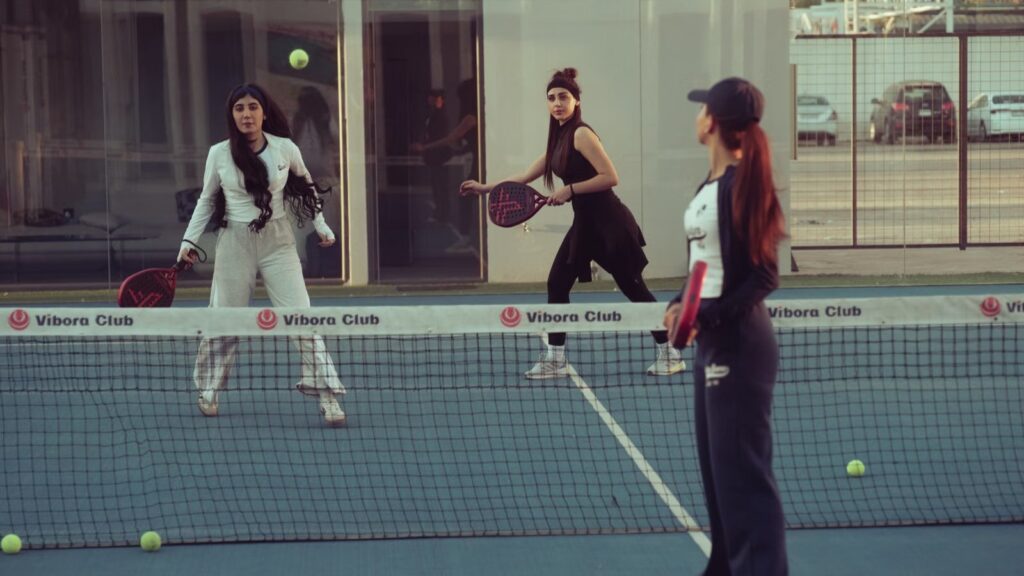

What is padel? It is a racket sport played by four people, in doubles, on a small court surrounded by glass walls and wire mesh. You use a solid racket with no strings, and the ball can come back into play off the walls, a little like squash. The scoring is the same as tennis.
If you have walked past a leisure centre lately and seen four people laughing inside what looks like a glass box, that was padel. In Britain it has gone from a few thousand players to well over a million in about five years. This guide explains how the game works, where it came from and how to have your first go.
Everything you need for your first game
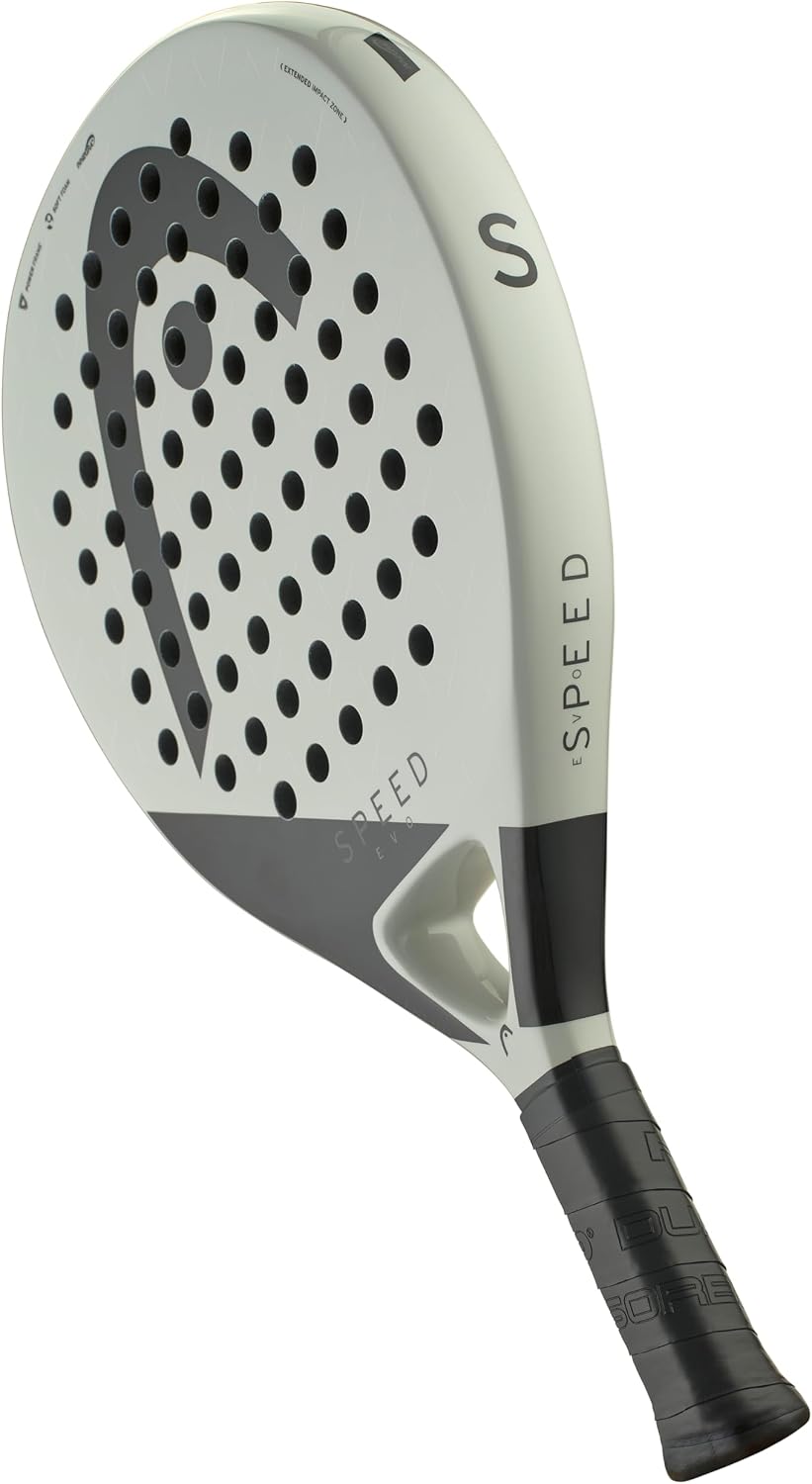
Beginner racket
HEAD Evo Speed
Light, round and forgiving. Our top pick for new players.
Check price on Amazon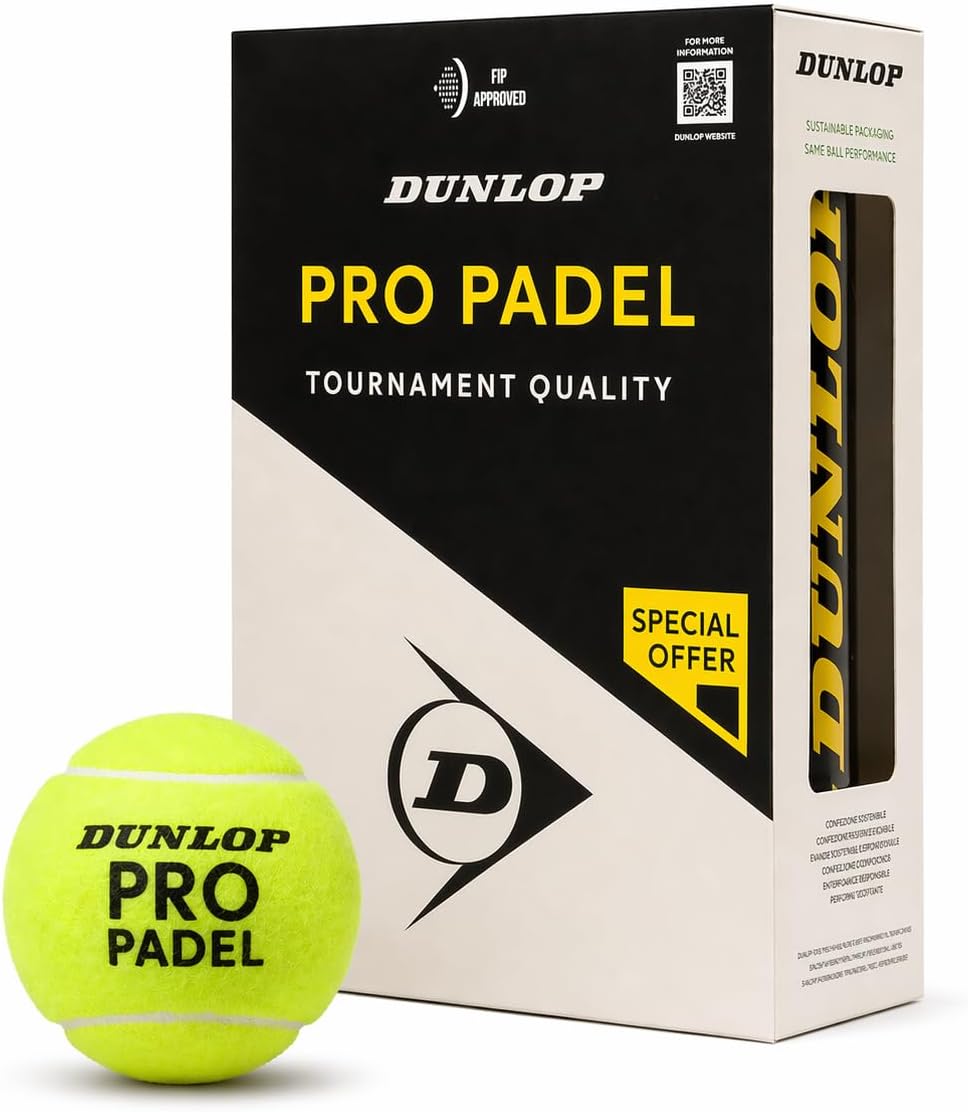
Balls
Dunlop Pro Padel
A tube of three that holds its bounce well, indoors and out.
Check price on Amazon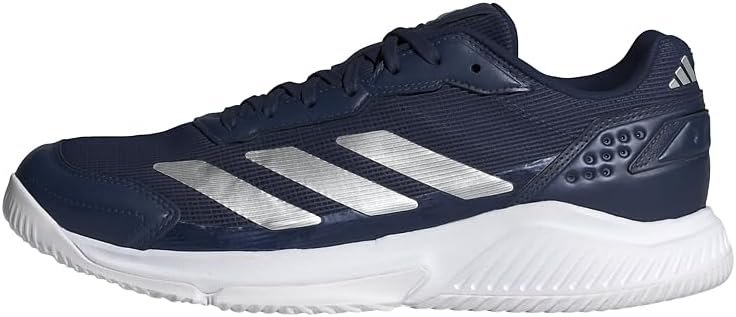
As an Amazon Associate I earn from qualifying purchases.
Padel at a glance
- Players: usually four, two on each side of the net.
- Court: 20 metres by 10 metres, enclosed by glass and mesh.
- Racket: solid and short, with holes but no strings.
- Ball: looks like a tennis ball, with slightly less pressure.
- Scoring: the same as tennis: 15, 30, 40, game.
- Players in Britain: 1.5 million, according to the LTA in October 2026.
How the game is played

Every point starts with a serve, and this is the first big difference from tennis. The serve is underarm. You bounce the ball behind the service line, then hit it at or below waist height, diagonally into the box on the other side. As in tennis, you get two tries.
After that, a rally works much like tennis doubles. The ball has to clear the net and bounce once in your opponents’ half. Once it has bounced, though, it can hit the back or side glass and stay in play. So your opponents can let it come off the wall and then hit it back.
You can also play the ball against your own walls to get it back over the net. That is the part that surprises new players most. On the other hand, if your shot hits the glass or the mesh on the other side before it bounces, you lose the point. Our guide to padel rules goes through the serve and the walls in more detail.
Because the court is small and the walls keep the ball alive, rallies tend to be long. As a result, beginners get far more hitting than they would in a first game of tennis, which is a big part of why people take to it so quickly.
How the scoring works
Padel scoring is the same as tennis. Points go 15, 30, 40 and game. Six games win a set, and most matches are the best of three sets, with a tie break at six games all.
At 40 all, many clubs play a golden point. Instead of playing on until one pair is two points clear, there is one deciding point, and the receiving pair choose which side it is served to. It keeps games moving, which helps when you only have the court for an hour.
Social sessions are often more relaxed. In an Americano, for example, everyone plays a set number of points with a new partner each round, and individual scores go on a leaderboard. Our free padel Americano generator works out the draw for you.
10% off for our readers
Beginner padel rackets at Padel Boost
A UK padel shop with over 20 rackets picked for new players. Your 10% discount is applied when you click through.
Advert. We may earn a commission if you buy, at no cost to you. Discount code PADELREVIEW.
The court
A padel court is 20 metres long and 10 metres wide, roughly a third of the size of a tennis court. The back walls are glass, three metres high, with mesh above them. The sides are part glass and part mesh. The net is 88 centimetres high in the middle and a little higher at the posts.
Most UK courts have blue or green artificial grass with sand brushed into it. Many are indoors, which matters in a British winter. You will find them at padel clubs, tennis clubs and gyms, and more and more at council leisure centres. According to the LTA, Britain now has 2,445 courts at 682 venues. Our guide to padel court size has every measurement.
Rackets and balls
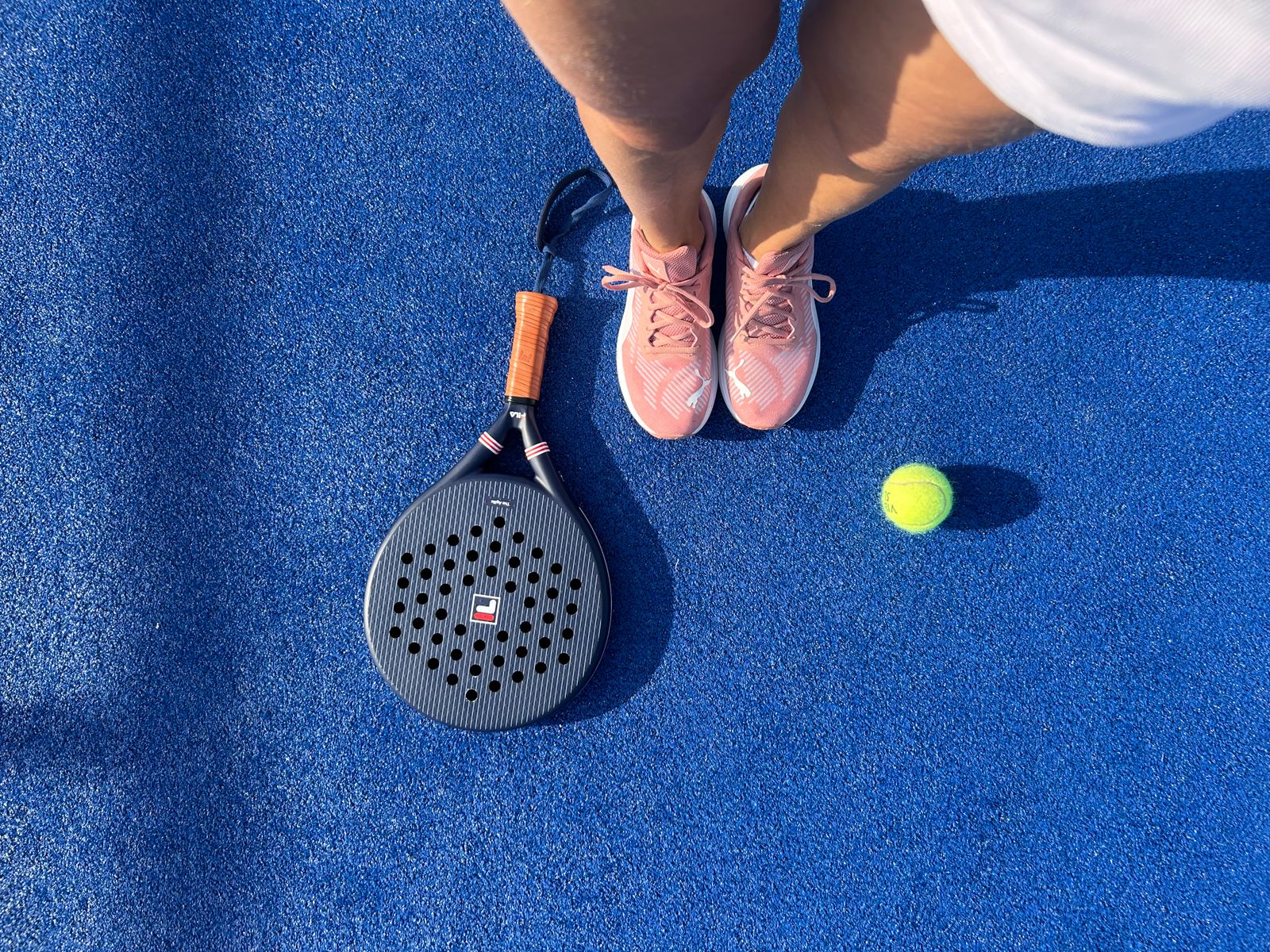
A padel racket is solid. It usually has a foam core inside a carbon or fibreglass face, with holes drilled through it. It is shorter than a tennis racket, at 45.5 centimetres at most, and it has a wrist strap that you are meant to wear.
Rackets come in three main shapes. Round ones have a big sweet spot, so they suit beginners. Teardrop shapes sit in the middle. Diamond shapes put the weight near the top for more power, but they are harder to control. Our guide to the best padel rackets for beginners goes through the options.

A lighter option
adidas Match Light 3.3
A light, round racket that is easy on the arm while you learn.
Padel balls look like tennis balls but carry a little less pressure, so they bounce slightly lower. A tube of three costs a few pounds, and keen groups open a fresh tube every game or two. There is more on that in our guide to the best padel balls.
Padel vs tennis: what is different?
Two thirds of padel players in Britain also play tennis, so the comparison comes up a lot. These are the main differences.
- The court is about a third of the size, so there is far less running.
- The serve is underarm and has to be hit at waist height or below.
- The walls are part of the game, as long as the ball bounces first.
- Rackets are solid and short, which makes the ball easier to control.
- It is almost always played as doubles.
Most people find padel easier to pick up than tennis. You can have proper rallies in your first hour, which rarely happens on a tennis court. Getting good still takes time, though, because using the walls well is a skill of its own. We compare all three in our guide to padel vs tennis vs pickleball.
Where did padel come from?

Padel began in Mexico. In 1969, Enrique Corcuera built a court at his holiday home in Acapulco and put walls around it so the ball would stop landing on his neighbour’s land. A friend of his, Alfonso de Hohenlohe, loved the game and built Spain’s first two courts at the Marbella Club in 1974.
From there it spread to Argentina and then right across Spain, where it is now one of the most played sports in the country. The name comes from the English word paddle. In 1993 Spain changed the spelling to padel to suit Spanish pronunciation, and that version stuck. In Britain, the LTA became the governing body for padel in 2020.
Why is padel so popular in the UK?
The growth has been remarkable. The LTA counted 15,000 players in Britain in 2019. By the end of 2024 there were 400,000, and by October 2026 there were 1.5 million.
There are a few reasons for it. First, it is easy to learn, so beginners enjoy their very first session. It is also sociable, since there are always four of you and plenty of games end with a coffee together. A court split four ways usually costs less than people expect. Finally, it suits a wide range of ages and fitness levels, because the small court means less running than tennis. Our guide to whether padel is good exercise looks at the calories and fitness side.
How to start playing padel
The easiest way in is to book a court and bring three friends. Most clubs hire rackets for a few pounds and sell balls at reception. Wear trainers with a flat or herringbone sole rather than running shoes, which can slip on the sandy turf.

Shoes made for the court
ASICS Game FF Padel
A proper padel sole that grips the sandy turf.
If you do not know three people who play, look for a beginner session or a social Americano at your nearest club. Playtomic, the booking app most UK clubs use, also lets you join open matches at your level.
To find a court, use our UK padel court finder, which lists clubs region by region with prices and booking links. Our guide to padel prices in the UK shows what a court costs in each city. For a step by step plan for your first game, see our padel for beginners guide.
What is padel? Your questions answered
Is padel the same as paddle tennis?
No. Paddle tennis is mostly played in the United States, on a court with no glass walls and a different ball. Padel has its own court, its own rules and its own governing bodies.
Is padel hard to learn?
Not at first. Most people can keep a rally going in their first session. The harder part is learning to let the ball come off the glass before you hit it, which takes a few games to trust.
Can you play padel with two people?
Yes, on a singles court, which is the same length but only six metres wide. Singles courts are still fairly rare in the UK, so check our list of singles padel courts before you book.
How do you pronounce padel?
Most people in the UK say it the same way as paddle. In Spain you will hear pa DEL, with the stress on the second half.
How long is a game of padel?
Most clubs take bookings of 60 or 90 minutes. A best of three sets match between two evenly matched pairs usually fills about an hour and a half.