
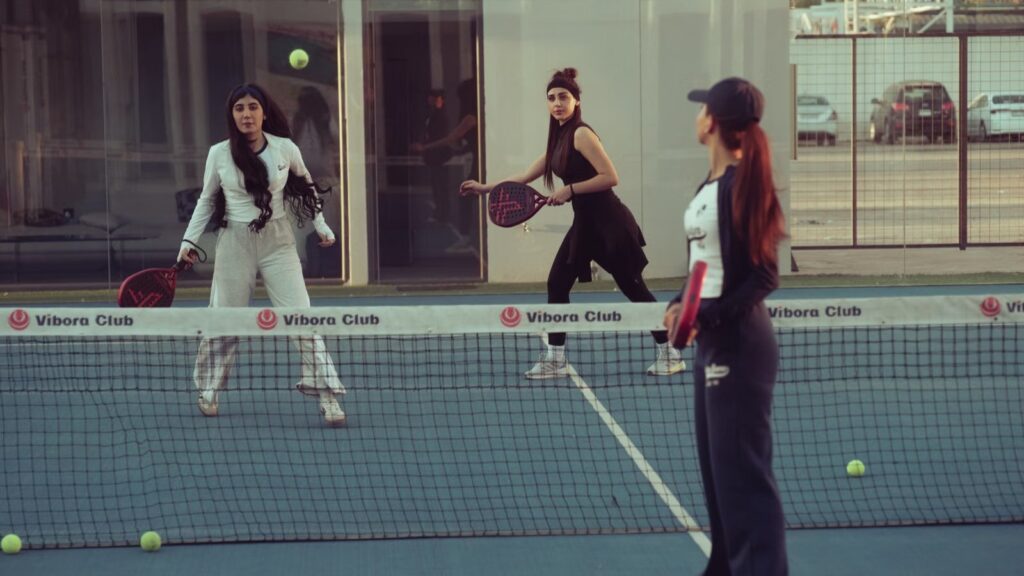
Padel rules are simpler than they look. If you have played tennis, you already know most of them, because the scoring and the basic idea of a rally are the same. The two big differences are the underarm serve and the walls, and those are what this guide spends most time on.
Everything here follows the rules of the International Padel Federation, which the LTA uses in Britain. Social games at your club may bend the padel rules a little, so agree anything unusual before you start.
The kit you need to play


Beginner racket
HEAD Evo Radical
A round, forgiving racket that suits new players.
Check price on AmazonAs an Amazon Associate I earn from qualifying purchases.
The rules in short
- Serve underarm, after one bounce, at or below waist height.
- Serve diagonally into the service box opposite.
- Every shot must bounce in your opponents’ court before it touches a wall.
- After that bounce, the ball can come off the glass and stay in play.
- You get one bounce on your side before you have to hit it.
- Scoring is the same as tennis.
The basic rules of padel
A game of padel is almost always doubles, with two players on each side of the net. Each point starts with a serve and ends when one pair makes a mistake. Every shot has to go over the net and bounce in your opponents’ half. They can hit it before it bounces, as a volley, or after one bounce, but never after two.
The walls are what make the game different. Once the ball has bounced, it can hit the glass or the mesh and still be in play. You can also use the glass behind you, hitting the ball into it so that it comes back over the net.
Padel rules for the serve
The serve is where most new players go wrong, so it helps to take it step by step.
- Stand behind the service line, with at least one foot on the ground. Do not step on the line as you serve.
- Bounce the ball once behind the line, then hit it after the bounce.
- Hit it underarm, with the ball at or below your waist.
- Aim diagonally across the net into the service box opposite.
- Start each game from the right hand side, then switch sides after every point.
The ball has to land in the box. After that, it can hit the back or side glass and still be good. However, if it bounces in the box and then hits the mesh, it is a fault.
As in tennis, you get two serves. If the ball clips the net and then lands in the right box, it is a let and you serve again. If both serves miss, the point goes to your opponents. One player serves for a whole game, and the four of you take turns, game by game.
Practise your serve
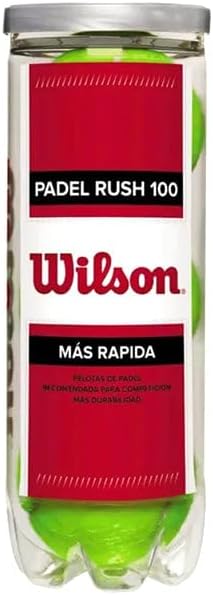
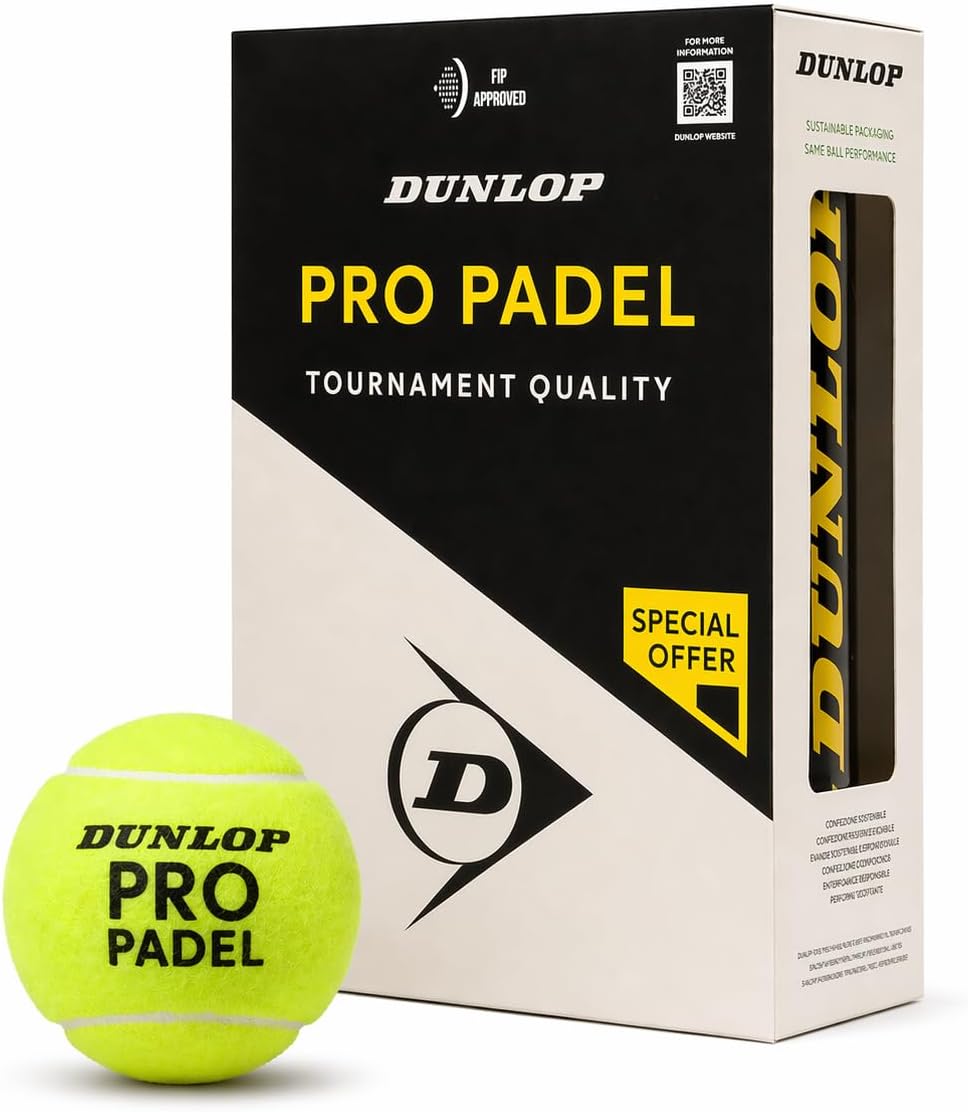
Dunlop Pro Padel balls
Fresh balls bounce truer, which makes the underarm serve easier to judge.
Returning the serve
The receiver must let the serve bounce before hitting it. Volleying the serve loses the point. Apart from that, the return is like any other shot: get it over the net and into your opponents’ court, either directly or off your own glass.
Only the player diagonally opposite the server can return it. If the serve hits the receiver’s partner, the serving pair win the point.
Padel rules for the walls

This is the part that takes a little getting used to. The simplest way to think about it is this: the ball must bounce on the floor first, and then the walls are fair game.
What is in
- The ball bounces in your opponents’ court, then hits their back or side glass.
- During a rally, the ball bounces and then hits the mesh. It may come back at an odd angle, but it is still in play.
- You hit the ball into your own glass, and it goes over the net and lands in their court.
- The ball bounces and then goes over the glass or out through a door. If the court allows it, your opponents can chase it outside.
What is out
- Your shot hits your opponents’ glass or mesh before it bounces.
- The ball bounces twice on your side before you hit it.
- You hit the ball into your own mesh to get it back. Only the glass can be used for that.
- A serve bounces in the box and then hits the mesh.

10% off for our readers
Padel balls by the tube or the box
Stock up at Padel Boost, a UK padel shop. Your 10% discount is applied when you click through.
Advert. We may earn a commission if you buy, at no cost to you. Discount code PADELREVIEW.
Faults that lose you the point
Most points end with a ball in the net or out of play. These are the other ways to lose one.
- The ball touches you, your partner or your clothing, rather than your racket.
- You touch the net or the posts with your body or racket while the ball is in play.
- You hit the ball twice, or you and your partner both hit it on the same shot.
- You reach over the net to hit the ball before it has crossed to your side.
- On an indoor court, the ball hits the ceiling, the lights or anything hanging above the court.
It works the other way too. If your shot hits one of your opponents before it bounces, your pair win the point, even if they were standing outside the court at the time. Some clubs have their own rule about low ceilings and beams, so check before you play.
Playing outside the court
Some courts have open doorways on each side, with space beyond them. On those courts, if the ball bounces in your half and then flies out, you can run outside and hit it back. The official rules allow it, and it makes for some of the best shots in the game.
Many UK courts, especially indoor ones, have no room outside the doors. In that case the point ends when the ball leaves the court, and the pair who hit it win. If you are not sure, ask at reception.
How scoring works under padel rules
Padel uses tennis scoring: 15, 30, 40 and game. Six games win a set, by two clear games, with a tie break at six all. Most matches are the best of three sets.
At 40 all, there are three ways to settle it. Club games usually play advantage, as in tennis, or a golden point, where one deciding point settles the game and the receivers choose which side it is served to. Since 2026, the professional tour has used a star point instead. Advantage is played twice, and if it is still level after that, a golden point decides it. Whichever you choose, agree it before you start.
New to the game altogether? Our guide to what padel is and how it works covers the basics, and our Americano generator sorts out the draw for a social session. If you have not played yet, our padel for beginners guide walks you through your first game. Once you have the basics, our guide to padel shots explains the bandeja, the víbora and more.
What padel rules say about rackets and balls
The rules are fairly relaxed about kit. A racket can be no longer than 45.5 centimetres and no wider than 26 centimetres, and the face can be no thicker than 38 millimetres. It must not have strings, and in official matches you have to wear the wrist strap.
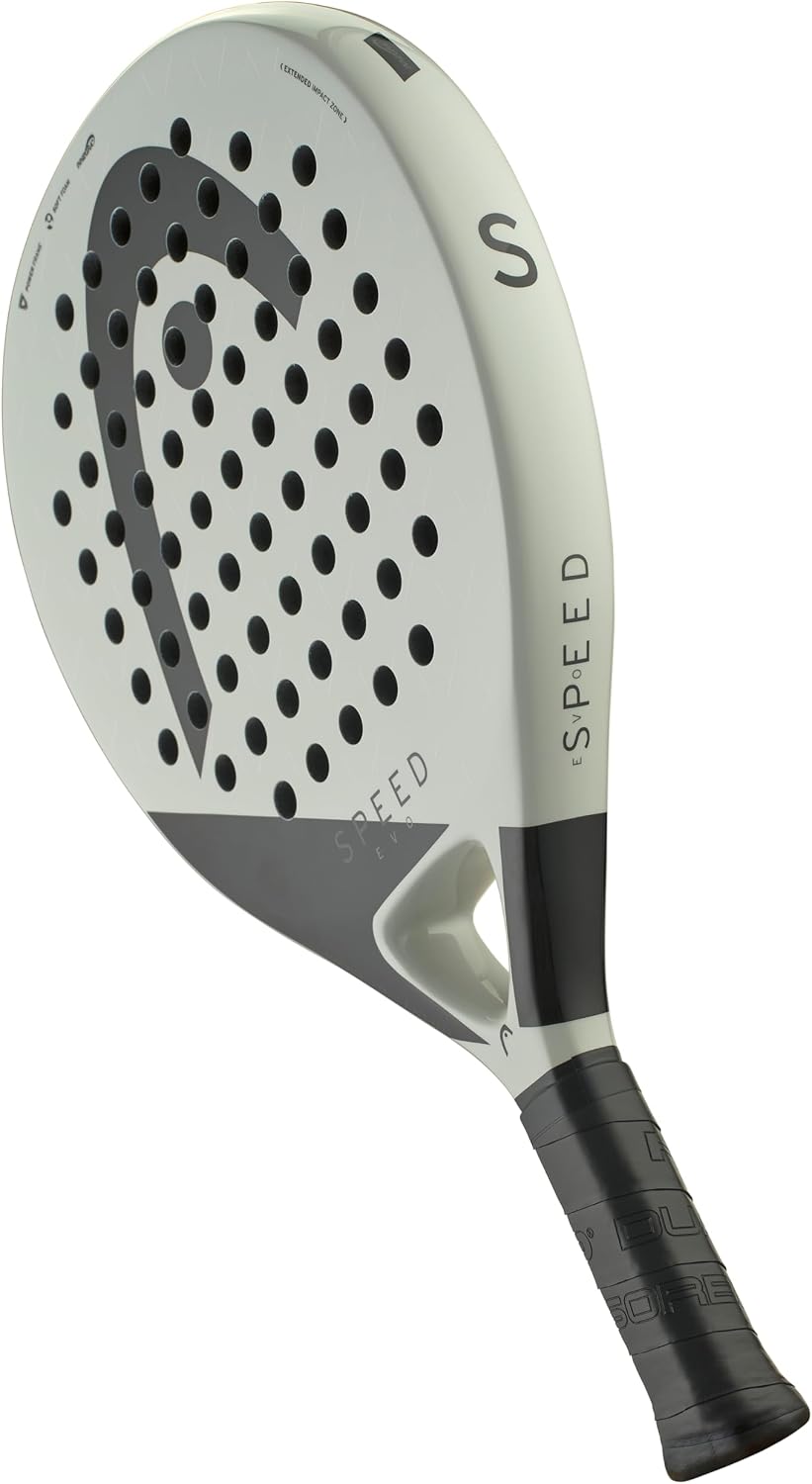
Our top beginner racket
HEAD Evo Speed
Light, round and forgiving. Our first pick for new players.
Balls have to be made for padel, which in practice means a padel ball from any known brand. Tennis balls are a little too lively, so they are best avoided. Our guide to the best padel balls compares the main tubes and boxes.
Padel rules: your questions answered
Can you volley the serve in padel?
No. The receiver has to let the serve bounce first. After the return, volleys are allowed for the rest of the point.
Can the serve hit the side glass?
Yes, as long as it bounces in the correct service box first. It is only a fault if it hits the mesh after that bounce.
Can you hit the ball off your own wall?
Yes. You can play the ball into the glass on your side so that it rebounds over the net. It still has to land in your opponents’ court, and using your own mesh this way is not allowed.
Can you touch the net in padel?
No. Touching the net or the posts while the ball is in play loses you the point, even by accident.
Can you play padel with three people?
Not under the official rules, which are written for doubles and singles. Plenty of groups play a three player game for fun, with one person rotating in each game, but there is no set format for it.
For the full official wording, see the LTA guide to padel rules.

